For those who might be interested, here’s a mock-up of the cover for Road of Waters, book 2 of the Ways of Camelot trilogy. The book is over 90% done. Just about another week of writing, then its on to editing and polishing. The book should be ready for release this summer!
Tag: ways of camelot
I just wanted to take a moment to provide a project updates for those who are interested. This year has started with a long run of odd illnesses in the Lorenzen household (colds, noro-virus, pink eye, vertigo, strep throat, sinus infection, and more). Needless to say, my usual writing pace has slowed down. But I hope to see my pace pick up this month.
Here is a list of my current projects and their expected completion dates:
UNLUCKY ALIEN Series (Sci-Fi Short Stories)
1. Alien at the Office will be out in e-book format this month.
WAYS OF CAMELOT novels (Arthurian Fantasy)
1. Road of Waters (Book 2) will be out in e-book and print in about two months (about 70% complete now)
2. Road of Clouds– last of the trilogy– should be finished this summer
CIRIAN WAR SAGA novels (Epic Fantasy)
1. Truth Mocker (Book 2) should be available by late 2014. (about 40% complete now)
2. Books #3 & 4 of this series are planned for 2015
3. Book 5– last of the saga- is planned for early 2016
TYRANTS OF TOLERANCE Series (YA Science Fiction)
The first of these novels has been delayed until 2015, due to the backlog
In addition to these projects, I still have numerous non-fiction guidebooks to complete for Genuine HR: books on hiring paperwork, employee discipline, and termination. I may also complete more short stories, but probably not until this summer.
I’m glad to be so busy, but sometimes I just wish there was more time in the day. To my loyal readers who are waiting patiently for the next book in their favorite series- Thank You for your patience. I will do my best to repay your patience with stories that you will enjoy.
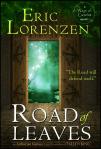
Road of Leaves- an excerpt
Today I thought I would share a short section from my latest fantasy novel, Road of Leaves. This snippet comes from the middle of the book, providing a humorous side story. Our main character, Thomas the magician’s apprentice, has just survived a harrowing journey through the first leg of the Road of Leaves. Thom and Francis, a monk from his traveling party, are trying to relax for the night on the Travelers’ Field, when another of their party shows up.
* * *
Thom looked to where the monk pointed and saw Geoffrey trudging onto the traveler’s field, appearing dejected. The youth looked around the meadow, spotted them, and headed their way.
“He’s coming to us,” said Thom with a slight frown. He had no desire to put up with that silly rooster.
“We’re the easiest to spot, being away from the crowd. You should have hid among all the others if you didn’t want to be noticed,” said Francis cheerfully. “Just be glad it’s not Iago coming over to sneer and insult.”
The noble’s son walked near but then stopped, apparently unsure if he would be welcomed.
“Lord Geoffrey, this is our camp,” said Francis. “If you come as companion and fellow camper, then welcome. You may come and join us. If you are looking for servants to order around, then find some other group because we are freemen.”
“I am simply looking for a place to sleep,” replied Geoffrey, raising both hands in protest. “Have I ever tried ordering either of you? I do not expect to be waited on. I just don’t want to be alone.”
The monk strode over and put a welcoming arm over the youth’s shoulder. “Then join us, my son. Set your saddlebags down and find some soft grass to cushion your blanket. You will have a more comfortable bed than most in that overcrowded inn, though maybe not as fine a dinner.”
Geoffrey dropped his bags and all three settled in to eat a cold meal, sharing what they had. Afterward, an awkward silence settled on them until Francis made a suggestion. “Why don’t the two of you go visit the pixie gathering? Tonight promises to be a boisterous one with such a large crowd of travelers. I will stay and watch our camp.”
Thom wasn’t certain he wanted to go carousing with a noble.
However, before he could demur, Geoffrey spoke up. “That is a wonderful idea. Always before, I have traveled by the Road of Waters to Camelot but this time I wanted to see a Pixie Eve. The other boys speak of it so highly. Let us go, Thomas.”
“Have fun,” said Francis. “I will enjoy some quiet for my prayers. But be wary of the Pix Ale, for its potent enough to make a bear drunk, let alone young fellows like the two of you.”
Geoffrey headed off, now excited, motioning for Thom to join him. The apprentice felt he had no choice but to go along.
“Oh, and one more thing, Thomas,” said Francis as the two left. “Pixies are drawn to music and to magic, so if you don’t want them pressing in on you, avoid crafting any enchantments.”
“No matter how hard anyone begs, they’ll get no magic out of me tonight,” said Thom. His ability to hear magical elements still had not returned, but he didn’t want to say so in front of the nobleman.
Francis gave him a frowning nod, apparently understanding what he meant.
* * *
The walk helped to clear Thom’s head, the dizziness fading. However, he was still deaf to magic. He tried his best to ignore that loss, concentrating on the darkened village they were passing through.
Sometime during their walk over to the Pixvale green, Geoffrey started treating Thom like a fellow squire. He shared his excitement of intermingling with pixies and experiencing their native customs. “I heard from David that a pixie girl’s kiss is as soft as a puppy’s fur but will set your lips to burning.”
“Don’t try stealing any kisses,” urged Thom, imagining the young noble angering the whole assembly. “We are in their land now and not your father’s.”
Geoffrey giggled nervously. “I would not be so bold a thief even at my father’s court. Do not worry, Thomas. I will not molest any pixie’s lips, though I will certainly not refuse any kiss offered.” Again he giggled with excitement.
Thom heard more outrageous stories about the powers and proclivities of pixies, all sworn true by various squires of the court and not one of them believable. As Geoffrey bantered, Thom listened without much comment. By the time they reached the commons, Thom was convinced that the Goat Woman was not disguised as the young noble, for he doubted anyone could keep up such an act.
On the community green, the pixies had already started their evening competitions. Thom heard music, singing, and laughter. Tall torches stood everywhere, giving the area an abundance of light. He saw pixie men sitting in a circle for some sort of drinking game. Apparently humans were welcome, for three men sat among them, towering over the smaller folk. A pair of pixies marched around the outside of the circle carrying a large pitcher and, whenever the singing stopped, they grabbed the nearest sitter and pulled his head back, pouring a dark, foamy beverage into his mouth.
“Look! A Draught Circle. Jacob claims to have won at that last year, winning a keg and a pixie’s kiss.”
Thom sensed that the squires of the royal court spent as much time dreaming about cuddling a girl as they did dreaming about becoming a knight. He had no such luxury. He was still just an apprentice and of no interest to any woman looking for romance. Following a few more years of total poverty, he had another decade as a journeyman. The only women trying to kiss him wanted something, be it money or a potion to curse their enemy. When they learned he had neither to give, they quickly lost interest.
As they stepped onto the grasses, Thom noticed a line of canopies where the visiting nobles congregated. “Do you want to go over there, my lord?”
“Me? Not likely,” said Geoffrey, frowning. “I would be spending the whole night running errands and fetching drinks. I might be a squire at Camelot, but here I would be just another lad to order around. Besides, some of them are the louts I was traveling with when my horse faltered. They denied me aid when I needed it, so I have no desire to be in their company. I am a gentleman, but they might provoke me to call them out for their boorishness.”
Thom doubted that a mere squire could demand a fight from his betters, but he was no expert on noble customs. Frankly, he gave Geoffrey’s words little hearing, for he was distracted by one of those walking among the canopies. She moved gracefully through the crowd, carrying a full flask of wine but spilling not a drop. She took it to a middle-aged woman reclining on a campaign chair under the middlemost tent. The maid poured into a waiting cup, expertly anticipating her mistress’ tendency to jerk the target as she watched the festivities. When done, the maid stepped back out of the way to await her next order.
Thom remembered her face, her smile, her vibrant personality.
Adele.
(Buy your own copy of Road of Leaves and enjoy the whole tale)
Thanks for reading.

Fantasy Maps
In fantasy, the author takes the audience into a strange and often dangerous land. We want to see that land, to smell it, to feel its wind and temperature shifts. There are so many strange and unbelievable things in this wild country, that we often need a sense of “place” so that we can better follow the story. Maps help tether us to this new land. Maps help us to understand a very foreign place- a land where magic lurks.
Personally, I love having a map whenever I enter a new fantasy land because it helps me visualize where the characters are and the places they are traveling through. Here are a few of my personal preferences in fantasy maps (and a few pet peeves):
1. Clarity- I detest blurry or tiny maps crammed onto a page. Even if I could locate that magnifying glass that’s around the house somewhere, I still won’t be able to find anything on that smug the publisher threw into the front of the book. I know its usually better in the hardcover edition, but really? Does it have to be that bad for the paperback?
2. Applicability- Does the map have anything to do with the story? Are the important locations even shown? No, I don’t mean the major cities or highest mountains. If half the book is spent in a particular town, then you need to put it on the map. Please.
3. Beauty- I love it when a map is a piece of art as well as informative.
4. Sense of Wonder- Can you taste the magic in the map? Does the map add to the fantasy? I have always felt that the Middle Earth maps do that; I can sense how wild and dangerous the lands are, just by studying the maps. The mountains soar high, while the forests brood.
5. Mysterious– Are there other places hinted at on the map? Lands beyond its boundaries or areas that are murky on purpose? I like a map that implies an even-greater world beyond its borders.
6. Believable– I want a map that either follows the laws of nature or has a good reason for breaking them. Do you have a desert next to a rainforest? Well then, I expect the author to have a good story to explain why the rain never makes it to the sand. Do you have radical changes in topography? Then the story should reflect how that influences the weather and temperature and commerce. Do the distances between places match up to what the story implies? There are a few authors out there who should enroll in a basic course on Physical Geography (or at least the artist who drew the map needs that class).
7. Details– I want some intriguing details in a map. I love Ursula LeGuin’s Earthsea map, with all of its tiny islands and their quirky names. The novels and the map work together, creating a richer experience for the reader. I wanted to go sailing around those islands myself, after reading the books and seeing the map.

What about my worlds? I have two fantasy series, one with maps and one without. The Cirian War Saga novels actually have two maps each. One it the map of Na Ciria and the other is a more local area (the Border Realm for the series’ first book: FALLEN KING).
My map-making skills are modest, but I hope that the Na Ciria maps help readers to better visualize this wild and beautiful country, with its rushing rivers and majestic mountains.
For my other series, the Ways of Camelot novels, I chose not to include any maps since the Arthurian legends are so full of contradictory locations and place names. I had no desire to wade into the middle of any of that. Instead, my stories center around a nondescript magician named Thomas and his journeys through the magical routes that lead into and out of Camelot. The first book in that series, ROAD OF LEAVES, stays mainly on that enchanted way and the Road cannot be mapped since it shifts every night.
The Cost of Magic
In most fantasy tales, magic plays an integral part. Magic can be wondrous or frightening. Characters use magic to defend the right and to ravage the countryside. Often, magic becomes one of the characters in the story. In Road of Leaves, the shifting Road seems to develop its own personality and has an integral role at the tale’s climax. In Lord of the Rings, the rings, especially the One, have something of a will of their own.
Many of us love fantasy stories, because a good tale will transport us into a new, wondrous, and dangerous land. Stories about magic feed our imagination and remind of us of our childhood dreams. But, it should be costly for someone to acquire any magical powers.
What must you SACRIFICE to gain magic?
It would be boring if magic was easy to learn and unlimited in its power. I agree with Author David Farland on this: magic must cost the person something. In his Runelords books, magic is acquired by “borrowing” the powers from dozens or hundreds of other people. The lords sometimes took the powers of others with force, but they dared not kill them- the person needed to survive or the lord would lose that newly-gained enhancement.
In my CIRIAN WAR SAGA novels, the characters have to submit to supernatural forces to gain power. The heroes are empowered by their prayer devotion to El, while the villains find magical powers through demon possession and human sacrifice. Neither way to power is cheap or easy.
In my WAYS OF CAMELOT (WoC) novels, the characters must study for decades to learn how to recognize and use magical elements. They sacrifice their youth, many of them never getting the chance to marry or have a family.
In the WoC novels, elements are rendered from magical plants, insects, and animals. It takes skill and time to be a magician, but more importantly it requires crushing magical things into powders. Something or someone dies to release the power needed to craft an enchantment. Then the darker truth comes out: some magicians are killing magical people to get their properties too.
What LIMITS magic?
If magic has no limits, then a magician becomes a god-like. How can anyone oppose him? I found some super hero tales boring for just that reason. The “hero” wasn’t anyone I could relate to because he had no flaws or restrictions on his power.
In a good fantasy, the magic has parameters. Either there are some things that magic cannot do or the magician is limited. In Lord of the Rings, Frodo struggles with his sword, trying to master its magic. He also contends with the ring, which often is working against him. If either had provided him unlimited powers without conditions, then the story would have failed.
In the WAYS OF CAMELOT novels, I purposely don’t use the terms “spell” or “casting” because the magic is something that is crafted, using a combination of magical elements, mundane elements, and usually some spit that attunes the enchantment to the magician. It takes time, although some enchantments can be prepared in advance. In this world, you can’t just shout out a phrase or think a thought. There is work involved in creating magic. Real, physical labor.
In the Cirian War Saga novels, the powers of El are gained through a life of devotion. It requires the discipline of prayer, hence the Attuls are known as Prayer Warriors. Should they falter in their faith, then El’s power will weaken in their life.
For the villains, they need a steady supply of victims to sacrifice to create their blood magic. They also need the cooperation of the demon within.
What are the ETHICS of magic?
Another aspect of magic is the ethics involved. Is magic good, bad, or amoral? In most fantasy stories, magic is used by both sides. So what makes magic either good or evil? Magic’s goodness or evilness can be determined by the practitioner, by how it is used, or by its inherent nature.
For my WoC novels, the issue of ethics became more pressing because the stories are set in King Arthur’s times and include Christian characters. For a Christian, there are Biblical injunctions against the practice of witchcraft and sorcery, which is why I differentiate between those “dark arts” and the natural magic in the Ways of Camelot novels. I also have the magicians craft enchantments, much like a smith or carpenter or weaver. It is work that one learns to master like any other profession; you just happen to be working with magical elements.
So what is the COST of magic?
Magic, because it overrules natural law, is a dangerous thing. So magic should also be hard to learn and difficult to practice. The answer differs by the story, but there should be a significant cost of some type. Magic is powerful, so it should never be an easy or simple thing to do.